
Overview
This guide provides essential insights and practical advice for effectively managing your Advantage+ Shopping Campaigns (ASC) through Actions. As ASC is a newer type of campaign, it comes with unique challenges and nuances when managed via Actions. This documentation is designed to clarify these aspects and guide you on optimizing your campaign strategy for better results.
Interested in learning more about ASC campaigns? Check out Meta’s Business Help Center for articles and tutorials. To get you started, here is the ASC overview page.
The TLDR of this is: when adjusting your ASC campaigns, while you should probably use Action Types that are for the campaign level, you may be required to provide the adset id instead of the campaign id.
So if you try your campaign level action with your ASC campaign id, and it errors, don’t fear, and retry utilizing the adset id, or complete the same test on the Adset Level action.
Tips & Tricks
Creating an action to update an Advantage+ Shopping Campaign is no different than setting up a standard action, so refer to the Getting Started instructions for a step by step tutorial on how to do so. The only difference in your setup is knowing what action type to select, and what IDs to provide.
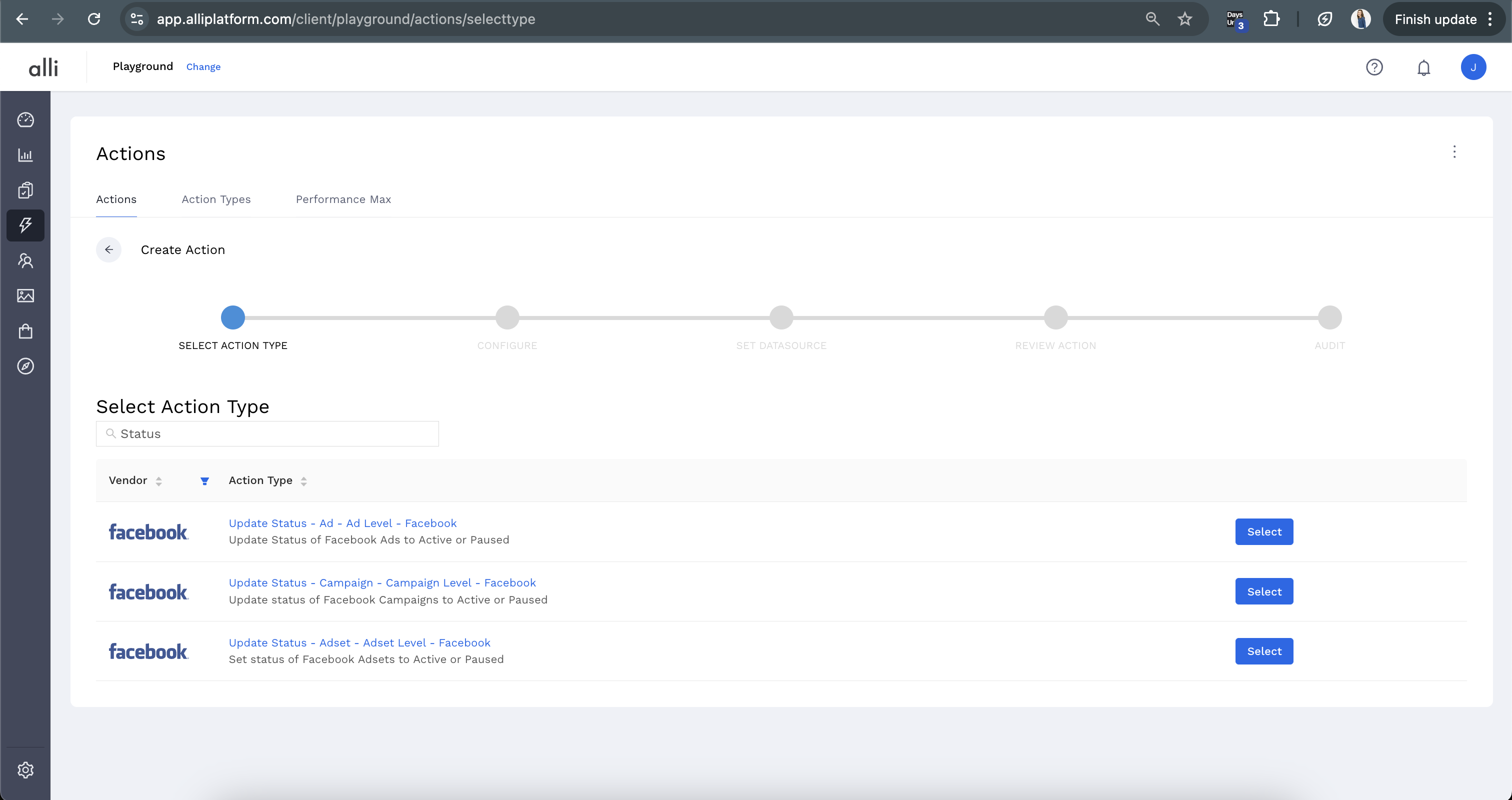
Updating Status Tips
For updating status, you should still leverage the Campaign Status action type, and should pass the ASC campaign_id, just as you do already for all other campaign types.
You may also pass the adset_id and it will not error, but note that it will only update the adset status, not the adset status and campaign.
-
Action Type - Select Campaign Level (Not Adset Level)
Updating Budget
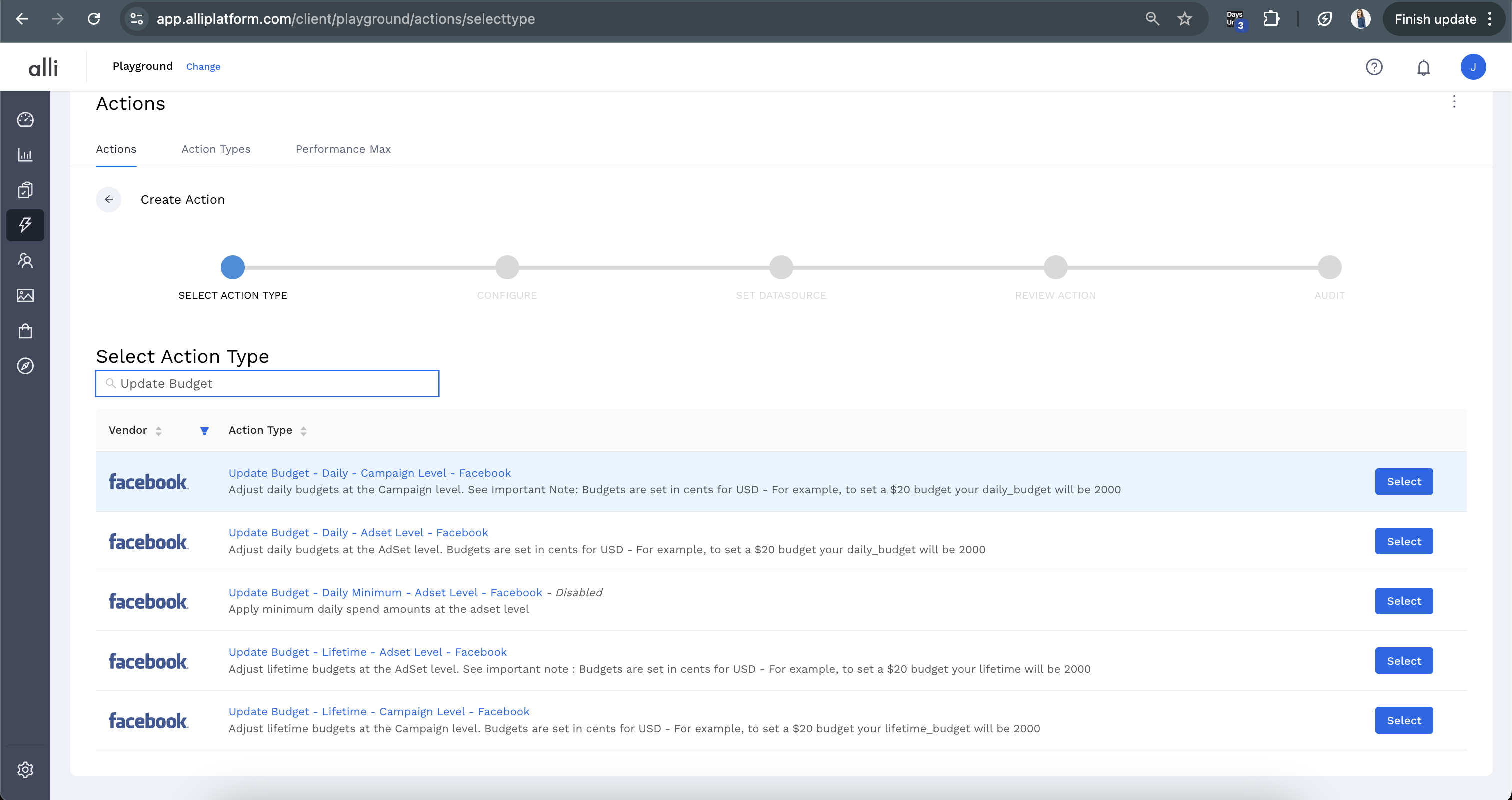
For updating budget, you should still leverage the Campaign Status action type, but rather than passing the campaign id for the id column pass the adset id to the action type. All other campaign types should pass their campaign id, but ASC campaigns must pass the adset_id.
-
Action Type - Select Campaign Level (Not Adset Level) - Lifetime or Daily
-
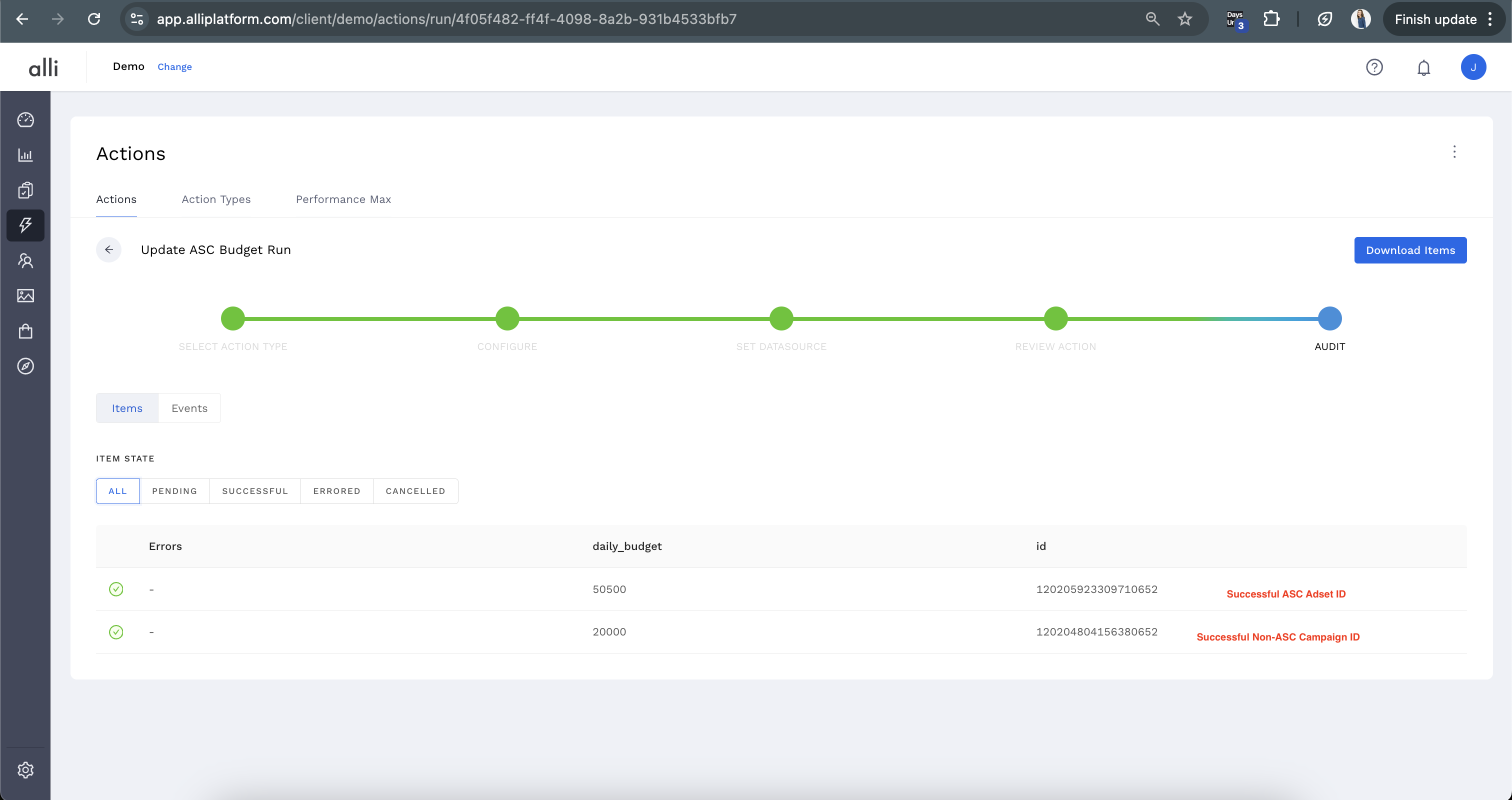
Example Action - Successfully run using the above technique
Other Action Types
-
Play around! Test using the campaign id and the adset id
-
Use the
Run Nowbutton to your advantage. Review the How-To: Test Your Action and the How-To: Run an Action One-Off with Manual File documentation for helpful tips on how to test or provide a test file manually.
The TLDR of this is: when adjusting your ASC campaigns, while you should use Action Types that are for the campaign level, you may be required to provide the adset id instead of the campaign id
So if you try your campaign level action with your ASC campaign id, and it errors, don’t fear, and retry utilizing the adset id, or complete the same test on the Adset Level action.
Dealing With Errors
-
To find specific error messages, reference the How-To: QA Your Action Runs instructions for the simple steps to see your specific error message.
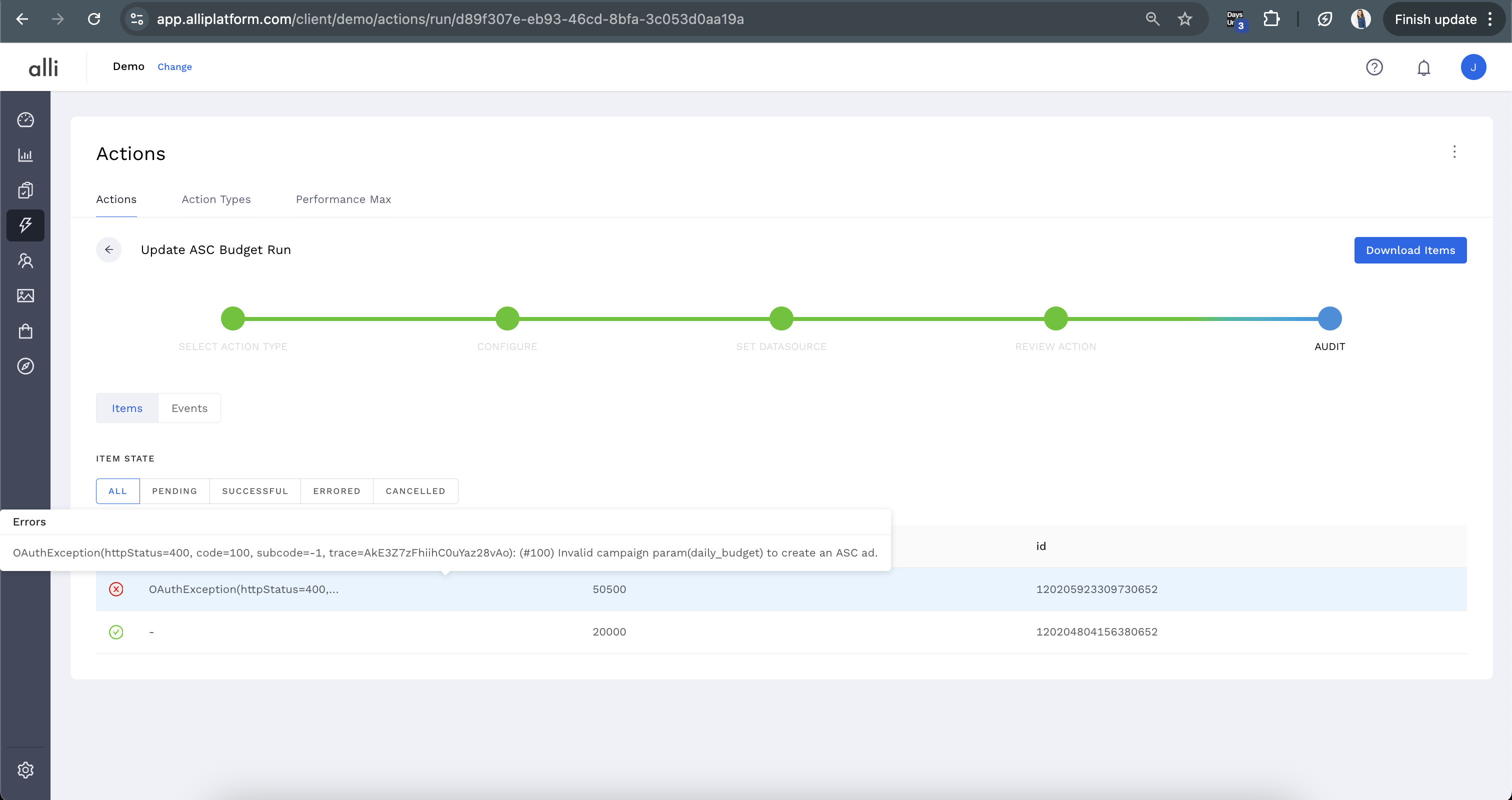
A sample errors (yours will differ depending on what action type you are using)
-
OAuthException(httpStatus=400, code=100, subcode=-1, trace=AkE3Z7zFhiihC0uYaz28vAo): (#100) Invalid campaign param(daily_budget) to create an ASC ad..
Example Error Visual:
Related articles
- Tutorial: AWIN Report Builder
- How-To: Connect your Google Sheet to Actions
- How-To: Disable or Remove an Installed App
- How-To: Set Up a New Workflow
- How-To: Pull Data for TikTok Trends
- Tutorial: Getting Started with Performance Max
- How-To: View Error Messages on an Action That Ran
- How-To: Filter Alli Data Reports by Date to Power Actions - Tips & Tricks
- How-To: Understanding Version Statuses
- How-To: Create a Scheduled Version
- Tutorial: LiftLab Data Delivery - SQL to SFTP Marketplace App Setup
- How-To: Weather API App
- How-To: Set Up Brand Media Pacing Datastudio Dashboard
- Tutorial: Adding Negative Keywords to Google Ads
- Tutorial: Managing DV360 Negative Keyword Lists